
 630-409-8184
What is the Procedure on the Day of the Prove-Up Hearing?
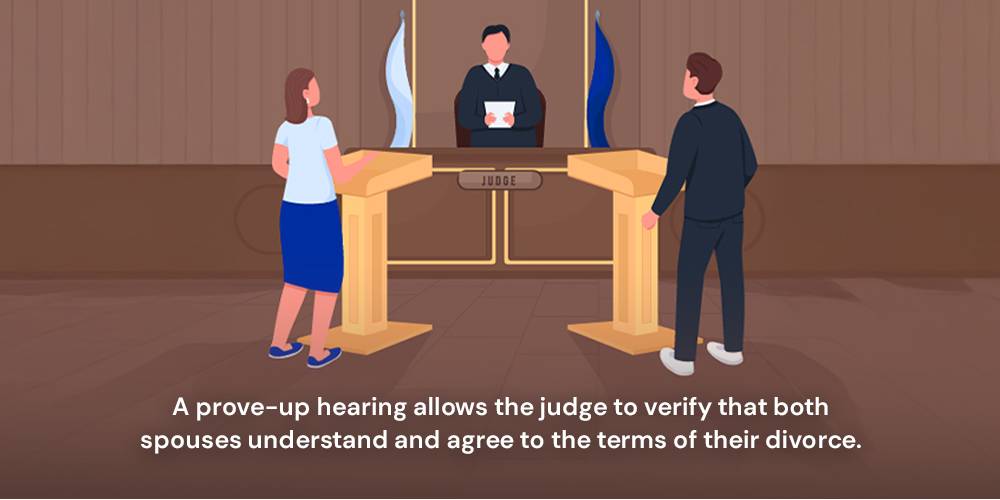
 Prove-up is the term used in Illinois family courts for the final court date of a divorce. This is the date set by the judge to finalize the divorce after an agreement has been reached between the spouses. Both spouses will appear before the judge, where they will be asked a series of questions to ensure that they are in agreement and that all matters have been settled.
The prove-up hearing represents the culmination of your divorce process. For many couples, this brief court appearance is the only time they will see the inside of a courtroom during their divorce. Understanding what happens during prove-up and how to prepare makes the experience less stressful. If you have questions about your upcoming 2026 prove-up hearing, speaking to your St. Charles, IL family law attorney can be helpful.
Do I Have to Attend the Prove-Up Hearing?
While both spouses may attend the prove-up hearing, the Petitioner (the spouse who originally filed for divorce) is usually the only one required to attend. The Respondent can choose to appear and testify, but they are not usually required to do so. The prove-up hearing can proceed without the Respondent when they have entered an Appearance and signed the agreements.
In some counties, like Cook, Kane, McHenry, Lake, and DuPage, courtrooms may allow a prove-up by affidavit. The affidavit will include the same information as the testimony in a prove-up hearing. If both spouses appear, the Petitioner will be questioned first, then the Respondent. The answers given by each spouse become a part of the official testimony and may be recorded by a court reporter or a digital recorder.
Remote prove-up hearings have become more common since 2020. Many Illinois courts now allow prove-up by Zoom or other video conferencing platforms. This option provides convenience for parties who live far from the courthouse or have scheduling conflicts. Check with your attorney about whether your county permits a remote prove-up.
What Type of Questions Are Asked During Prove-Up?
The questions asked at a prove-up hearing will be specific to each divorce. The first round of questions is usually asked simply to confirm jurisdiction and some of the allegations made by the Petitioner in the original dissolution petition, such as:
-
Were you married to Mr. Jones on August 2, 2003, in Chicago, IL?
-
Before you filed the Petition for Dissolution, did you reside in Illinois for 90 days?
-
Do you agree that an irretrievable breakdown of the marriage was caused by irreconcilable differences?
After these general questions have been asked, the judge will ask more specific questions regarding the terms of the divorce or the information included in the parenting plan, for example:
-
Do you agree that Mrs. Jones will be awarded the 2019 Toyota Prius?
-
Do you agree that you are waiving the right to receive spousal maintenance from Mrs. Jones?
-
Do you agree that you will share the allocation of parental responsibilities of your minor children with Mrs. Jones?
Once all these questions have been asked and answered, the judge will ask each party, or the party present, whether all the terms of the agreements submitted have been read and reviewed, whether the signature on those documents is that of the spouse, and whether there was any force or coercion involved in reaching these agreements.
How Long Does a Prove-Up Hearing Take?
Most prove-up hearings last between 10 and 30 minutes. The length depends on the complexity of your case and how many issues the judge wants to explore. Simple divorces with no children and minimal assets might take only 10 to 15 minutes. Cases involving detailed parenting plans, substantial assets, or maintenance provisions might take 20 to 30 minutes.
You should plan to spend more time at the courthouse than just the hearing itself. Courts schedule multiple prove-up hearings on the same day. You might wait 30 minutes to an hour before your case is called. Arriving early ensures you are present when the judge calls your name.
What Documents Are Required at an Illinois Prove-Up Hearing?
Like the questions asked, the documents required at the prove-up hearing will be specific to each case but typically include:
-
A Marital Settlement Agreement, which details how the couple's assets and debts will be divided and how much child and spousal support will be paid, if applicable.
-
A Judgment for Dissolution, which officially dissolves the marriage and grants the divorce.
-
If there are children in the marriage, the Allocation of Parental Responsibilities document will be included, as well as a parenting plan.
Additional documents might be required depending on your situation. If you agreed to divide retirement accounts, a Qualified Domestic Relations Order or QILDRO must be submitted. If one spouse is keeping the marital home and refinancing the mortgage, documentation about refinancing might be needed.
Can the Judge Reject Our Settlement Agreement at a Prove-Up Hearing?
Yes, though this is uncommon. Judges have discretion to reject agreements they find unconscionable or not in the best interests of children. If the judge has concerns about your agreement, they might ask additional questions or ask for changes before approving it.
How Does the Prove-Up Hearing End?
At the end of a prove-up hearing, the judge will issue his or her findings. Findings are the facts and conclusions the judge reaches after examining the testimony and evidence. After determining that the court has proper jurisdiction, that the terms of the agreements are acceptable, and that irreconcilable differences have caused the irretrievable breakdown of the marriage per 750 ILCS 5/401, the judge will declare the marriage dissolved.
The judge signs the Judgment for Dissolution of Marriage, which officially ends your marriage. The judgment includes or incorporates by reference all agreements about property, maintenance, and if applicable, parenting arrangements. This judgment is a court order that both parties must follow.
Your divorce becomes final when the judge signs the judgment. There is no waiting period after prove-up in Illinois; you are legally divorced immediately. However, the judgment is not entered into the court's records until the clerk processes it, which might take a few days.
What If We Change Our Minds Before Prove-Up?
You can modify your settlement agreement any time before the judge signs the judgment. If you and your spouse agree to changes, your attorneys draft amended agreements and present them at prove-up. The judge will review and approve the modified terms.
If only one party wants changes, the situation becomes more complicated. You cannot unilaterally change agreements your spouse already signed. If you have serious concerns about the agreement, discuss them with your attorney before the prove-up date.
Changing your mind about the divorce itself requires withdrawing your petition or dismissing the case. This happens before prove-up and requires filing appropriate motions. If you are having second thoughts, talk to your attorney immediately about your options.
Contact a DuPage County, IL Divorce Lawyer
Divorce is rarely easy, but working with a St. Charles, IL divorce attorney from The Law Office of Matthew M. Williams, P.C. can simplify the process while ensuring that the decisions made are fair to both spouses. Our attorneys are focused on mediation and collaborative divorce to make your divorce smoother and more amicable. Call 630-409-8184 to schedule an initial meeting.






Ready to Get Started?
To schedule a free consultation with Aurora divorce attorney, Matthew M. Williams, call 630-409-8184 or fill out the form below.



Aurora
1444 North Farnsworth Ave., #307
Aurora, IL 60505
P 630-409-8184
MAP + DIRECTIONS
BY APPOINTMENT ONLY
Yorkville
520 E Kendall Drive, Suite C-1
Yorkville, IL 60560
P 630-409-8184
MAP + DIRECTIONS


